Law Of Multiple Proportions Example. In the first compound, 1.000 g of phosphorus is combined with 3.433 g of chlorine, and in the second, 2.500 g phosphorus is combined with 14.306 g chlorine. The law of multiple proportions asserts that when two elements combine to form more than one compound, the in the hydrocarbon examples, the carbon is taken as having the fixed weight.
Chemical Reactions Chemistry Visionlearning from www.visionlearning.com
Co 2 = 12gm carbon+ 32 grams of oxygen. An example of the law of multiple proportions is carbon monoxide and carbon dioxide. The law of multiple proportions is not universally true.
Law Of Multiple Proportions Practice Problems, Chemistry Examples, Fundamental Chemical Laws.
Law of multiple proportions, statement that when two elements combine with each other to form more than one compound, the weights of one element that combine with a fixed weight of the other are in a ratio of small whole numbers. The law of definite proportions states samples of a compound will always contain the same proportion of elements by mass.the mass ratio of elements is fixed no matter where the elements came from, how the compound is prepared, or any other factor. Or 266 grams’ oxygen required to produce one oxide.
Examples Of Law Of Multiple Proportion.
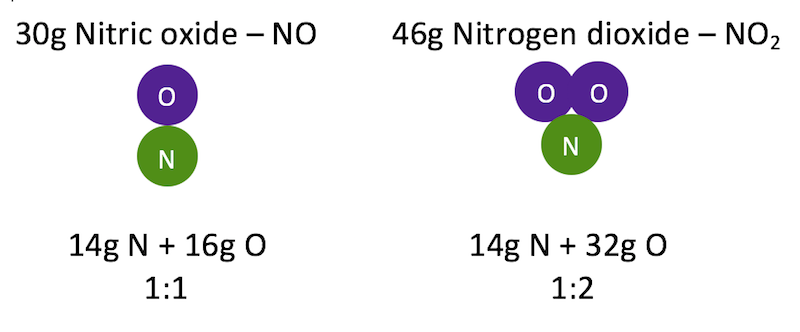
Law of multiple proportions when two elements combine with each other to form two or more compounds, the ratios of the masses of one element that combines with the fixed ratio of the other are simple whole numbers. Hence they tend to follow the law of multiple proportions. The ratio of the mass of oxygen in the given two compounds is 16:32=1:2.
A Proportion Formula Is An Equation That Can Be Solved To Get The Comparison Values.
Co 2 = 12gm carbon+ 32 grams of oxygen. Carbon combines with oxygen in different proportions to form two different oxides. Let us assume 2 molecules co (carbon monoxide) and co 2 (carbon dioxide).
Common Examples Of The Law Of Definite Proportions.
In all the above examples, it assumed, atomic masses of elements are in whole numbers, but this is not a case. This law is sometimes called dalton's law, named after john dalton, the chemist who first expressed it. Nitrogen monoxide and nitrogen dioxide.
Let’s Suppose We Consider That 100 Grams Of Carbon, May Interlink With 133 Grams Of Oxygen To Produce The Other Compound.
Co= 12gm of carbon + 16 grams of oxygen. The first compound contains 42.9% by mass carbon and 57.1% by mass oxygen. The iron and oxygen atoms are in the ratio that ranges from 0.83:1 to 0.95:1.